
Supporting Cats With Allergies: Natural Care & Tips
Cats can experience skin irritation and seasonal sensitivities related to food ingredients and environmental triggers such as dust, pollen, and seasonal changes. These issues can leave cats itchy, restless, and generally uncomfortable, and it is difficult to see your cat not feeling like themselves.
For pet parents, the goal is to support comfort while also understanding what may be contributing to allergies in cats. Identifying patterns and potential triggers can feel stressful, especially when symptoms come and go.
In this article, we explain what allergies are in cats, common signs and possible causes, and practical ways to support skin comfort through daily care and veterinarian guided tips. We also discuss cannabidiol (CBD) as a wellness option that may support calm and overall well being as part of a consistent routine.
Understanding Cat Allergies

What are allergies in cats?
Allergies in cats can occur when the immune system reacts strongly to a substance that is typically harmless. This reaction can show up as skin irritation and itchiness. Some cats also have sneezing or watery eyes. Others may have occasional stomach upset, such as vomiting or diarrhea.
Identifying the specific trigger is not always straightforward. Common triggers can include pollen, dust, certain food ingredients, fleas, and in some cases medications. Even when the exact cause is not immediately clear, the signs of a skin or seasonal sensitivity issue are often noticeable and can signal that your cat may need additional support.
Common signs and symptoms of allergies in cats
- Frequent scratching, licking, or chewing
- Bald patches, redness, or irritated skin
- Head shaking or ongoing ear discomfort
- Sneezing, coughing, or wheezing
- Occasional vomiting or diarrhea, which can sometimes be food related
How allergies affect cats
Allergies can affect a cat’s comfort and day to day behavior. Skin may become itchy and irritated, and some cats can develop ongoing ear discomfort. Others may have occasional vomiting or respiratory signs like coughing or wheezing.
In many cases, exposure to a trigger can lead to a stronger immune response, which can contribute to visible skin irritation and recurring flare ups. If symptoms are frequent or worsening, a veterinarian can help rule out other causes and recommend a plan that supports your cat’s comfort.
Causes of Cat Allergies
Allergies in cats can be triggered by environmental factors, certain food ingredients, or flea bites. Common environmental triggers include pollen, dust mites, mold, grass, and strong household cleaners or fragrances. When exposed, some cats may itch more, over groom, sneeze, or develop watery eyes. Ear discomfort can also show up in some cases.
Food related sensitivities can be connected to ingredients like chicken, beef, fish, dairy, or grains. Signs can include ongoing itchiness, especially around the face and ears, along with occasional vomiting or diarrhea.
Flea bites can also be a trigger. Cats that are sensitive to flea saliva may scratch intensely and develop hair thinning, scabs, or irritated skin. Consistent flea prevention is an important part of supporting skin comfort.
Natural Ways to Soothe Your Cat's Allergies at Home
Create an Allergen-Free Haven
Clean a little more often than usual, especially during high pollen or dusty seasons. On high pollen days, keeping windows closed can help limit what comes inside. Wipe window sills and nearby surfaces where pollen tends to collect. Use a damp cloth to dust surfaces so particles are picked up instead of stirred back into the air. Wash your cat’s bedding weekly to help clear dander and any allergens they may track in.
Support indoor air quality with a HEPA air purifier, and replace filters on schedule so it continues to work effectively.
Reduce strong scents in your home. Skip plug ins and heavily fragranced cleaners or detergents, and choose unscented litter when possible.
Keep grooming gentle. Brush softly to remove loose hair, and use a lightly damp cloth to wipe the coat if your cat tolerates it. This can help lift surface allergens and support skin comfort.
Focus on Diet and Nutrition
Work with your veterinarian on a structured elimination diet if you suspect a food related trigger. A consistent plan makes it easier to identify patterns and understand what supports your cat best.
Ask your veterinarian about omega 3s that are appropriate for cats. Vet approved omega 3s can help support normal skin and coat health as part of a balanced diet.
Provide Comfort Support and Prevention
Stay consistent with flea control. Flea bites can contribute to cat allergy symptoms and make skin irritation feel worse.
If your veterinarian recommends bathing, use a gentle, fragrance free product made for cats and rinse thoroughly. This can help remove surface buildup and support skin comfort.
Track patterns and keep routines consistent. These natural remedies for cat allergies can support a plan for how to get rid of cat allergies naturally by focusing on daily habits and trigger reduction.
How CBD Can Support Cats During Allergy Season
Thinking how to get rid of cat allergies naturally? CBD has become a popular option in pet wellness, especially for pet parents who want to build a consistent daily routine that supports comfort. Many people ask, can I give my cat CBD. Others wonder what does CBD do for cats. CBD is a naturally occurring compound from the hemp plant that interacts with your cat’s endocannabinoid system (ECS), which plays a role in maintaining normal balance in the body.
CBD is non intoxicating and does not cause a “high” like THC. In a daily wellness routine, CBD may help keep cats calm and relaxed, which can be helpful during seasonal changes or other everyday stress triggers. Some pet parents also use CBD as a general wellness option to support day to day comfort and overall well being
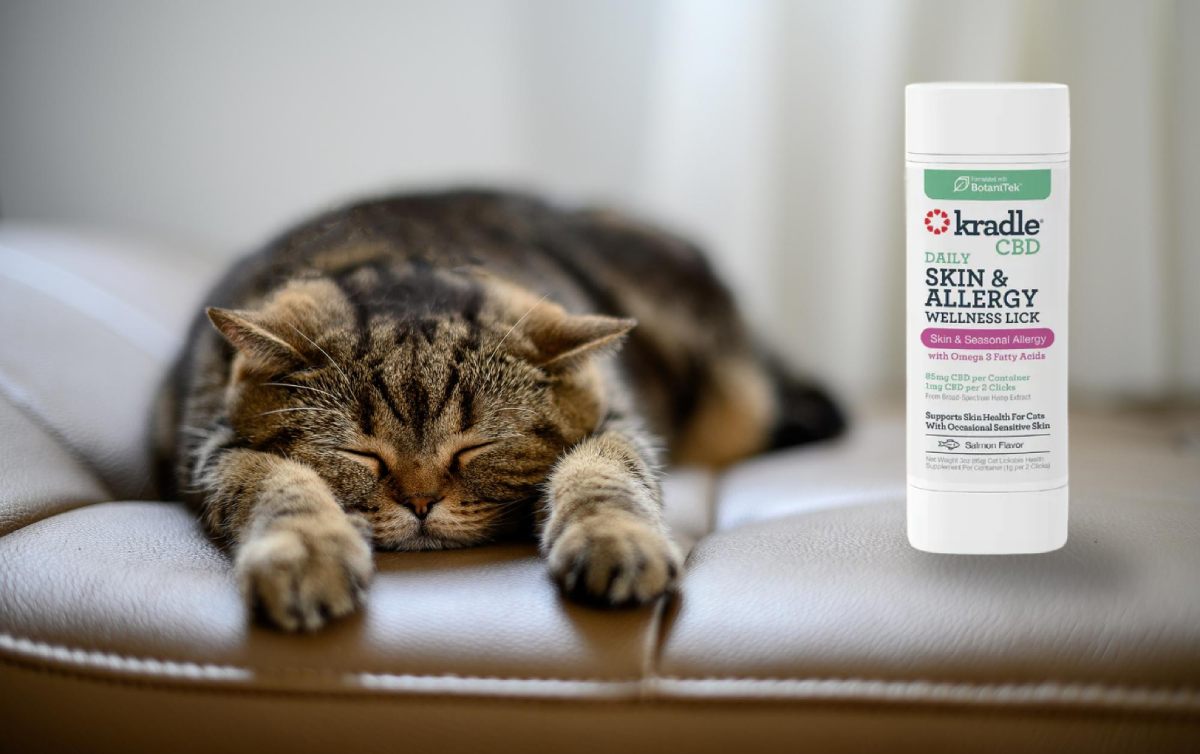
Kradle recently launched a daily wellness lick designed to support a cat’s skin health as part of a consistent routine. The Kradle CBD Cat Skin and Seasonal Allergy Wellness Lick is formulated with Kradle’s BotaniTek™ CBD Cat Skin Health blend.
This click and lick product is a daily supplement formulated to promote comfort and support skin health for cats with skin sensitivities, especially during seasonal changes. This lickable supplement features CBD, Astragalus, Omega Fatty Acids, Quercetin, and Sodium, and it is designed to support normal skin moisture and overall skin comfort without adding topical steps to your routine.
Benefits of CBD for Cats with Allergies
People often ask, can I give my cat CBD. CBD is non intoxicating and is commonly used as part of a daily pet wellness routine. Some pet parents choose CBD to support calm and relaxation, especially during seasonal changes or other everyday stress triggers.
CBD may also support skin comfort as part of a consistent routine, along with simple home habits like gentle grooming and an allergen mindful environment. Results can vary by cat, and if your cat’s symptoms are persistent or worsening, your veterinarian can help you choose the best support plan.
When to Consult Your Veterinarian
Contact your veterinarian if signs feel intense, start suddenly, or keep coming back. Bring photos and a short timeline of when you noticed changes, what your cat was exposed to, and anything new in their routine.
Seek care right away if you notice swelling, breathing trouble, or vomiting, especially after introducing a new food, supplement, or product.
Your veterinarian can help confirm what may be contributing to cat allergies symptoms and guide next steps to support your cat’s comfort safely.
FAQs
What are the signs of allergies in cats?
Many cats show allergies through skin and grooming changes first. You may notice frequent scratching, licking, or chewing, especially around the face, ears, belly, and paws. Fur can thin from over grooming, and some cats develop redness, small scabs, or irritated patches. Head shaking and ongoing ear discomfort can also occur.
Is CBD safe for cats with allergies?
CBD is often described as well tolerated when it is made for pets and used as directed. Choose a product that is non intoxicating and formulated for cats. Start low, follow the label, and check with your veterinarian first, especially if your cat takes other medications or supplements.
Can CBD replace traditional allergy medications for cats?
CBD is best viewed as a wellness option that may support calm and overall comfort. It should not replace veterinarian recommended medications unless your veterinarian advises that it is appropriate for your cat.
How quickly will CBD start to work for my cat’s allergies?
Timing varies by cat and by product. Some pet parents notice changes in calmness relatively quickly, while broader comfort support often depends on consistent daily use and the rest of your cat’s routine. Track changes daily so you can spot patterns over time.
Will CBD increase appetite in cats?
Some pet parents report appetite changes, but responses can vary. If your cat’s appetite shifts noticeably, or if they stop eating, contact your veterinarian for guidance.
What Can I Give My Cat for Allergies?
Start with veterinarian guided basics such as consistent flea prevention, diet support when needed, and a clear plan to reduce triggers at home. Ask your veterinarian whether CBD fits your cat’s routine as a wellness option. If you use CBD, choose a pet specific product from a reputable brand and introduce only one change at a time so it is easier to track what helps.
Can cats have allergies?
Yes. Cats can react to fleas, dust, mold, pollen, and certain food ingredients. If symptoms appear, keep notes on what you observe, including timing and possible exposures, and share that information with your veterinarian.