
Article: Probiotics for Dogs: What They Do and Why Gut Health Matters
Probiotics for Dogs: What They Do and Why Gut Health Matters
Does your dog have a sensitive stomach, occasional gas, or digestive changes after a shift in diet or routine? Digestive balance plays an important role in your dog’s overall wellness, and even small changes can affect how comfortable and consistent their daily routine feels.
When it comes to probiotics for dogs gut health, these beneficial microorganisms help support the digestive tract and maintain a healthy balance of bacteria in the gut. As part of a consistent wellness routine, probiotics may help support normal digestion, stool quality, and nutrient absorption.
This guide explains how probiotics work, when they may be most helpful, and how prebiotics and postbiotics can complement digestive support. You’ll also learn simple ways to incorporate gut health supplements into your dog’s daily routine so you can make informed choices that support their long-term well-being.
What Are Probiotics — And What Do They Do for Dogs?

If you’re wondering what to give dogs for gut health, probiotics are a helpful place to start. These beneficial microorganisms support the digestive tract by helping maintain a balanced gut environment as part of your dog’s daily wellness routine.
Probiotics help maintain proper gut flora, which plays an important role in normal digestion and overall digestive tract health. They also support the breakdown and absorption of nutrients, helping your dog get more from their everyday diet.
A balanced gut environment can also help support normal stool quality and digestive consistency, especially during occasional changes in diet, routine, or environment. During these times, probiotics may help maintain the gut’s natural microbial balance.
Because much of a dog’s immune system is connected to the gut, a consistent probiotic routine can also help support healthy immune function from within the digestive tract.
Prebiotics, Probiotics, and Postbiotics — What's the Difference?
Prebiotics, probiotics, and postbiotics each play a different role in supporting your dog’s digestive wellness. Together, they help maintain a balanced gut environment, support normal digestive function, and contribute to overall daily wellness.
Understanding the difference can also help pet parents recognize when their dog’s digestive routine may need extra support. Common dog gut health signs to know may include occasional gas, changes in stool quality, appetite changes, or signs of digestive sensitivity after diet or routine changes.
Prebiotics
Prebiotics are specific types of dietary fiber that serve as nourishment for beneficial bacteria in the gut. Rather than adding bacteria directly, prebiotics help support the existing microorganisms already living in the digestive tract, encouraging a balanced gut environment over time.
Probiotics
Probiotics are live beneficial microorganisms that help maintain proper gut flora in the digestive tract. As part of a consistent wellness routine, probiotics may help support normal digestion, stool quality, and nutrient absorption.
Postbiotics
Postbiotics are beneficial compounds produced by microorganisms during the fermentation process. Because they do not rely on live bacteria, postbiotics can offer stable digestive support while helping maintain a healthy gut environment.
When choosing probiotics for dogs gut health, it helps to look for formulas that support the full digestive ecosystem, including ingredients that help maintain normal gut balance, digestive consistency, and everyday wellness.
When Are Probiotics Most Useful for Dogs?

Knowing when to use dog probiotics for gut health can help you support your dog’s digestive wellness through everyday routines, diet changes, and occasional moments of stress.
Probiotics may be especially useful when your dog needs extra digestive support, including:
-
After prescribed antibiotic use: Probiotics help maintain proper gut flora and support a balanced digestive environment after your dog completes a veterinarian-recommended antibiotic routine.
-
During travel, boarding, or routine changes: New environments can affect normal digestive patterns. Probiotics may help support digestive consistency during occasional stress from travel, boarding, or changes in routine.
-
When transitioning to a new food: Probiotics can help support normal digestion as your dog adjusts to a new dietary formula.
-
After occasional dietary indiscretion: If your dog eats something outside their usual diet, probiotics may help support normal stool quality and digestive tract health.
-
During puppy growth and weaning: Probiotics can help support developing digestive systems as puppies transition to new foods and routines.
-
For senior dogs: As dogs age, probiotics can help maintain intestinal balance and support overall digestive wellness.
With the right timing and a consistent routine, probiotics can be a helpful part of how to improve dog digestion naturally while keeping your dog’s daily wellness plan simple and manageable.
What to Look for in a Probiotic Supplement for Dogs
When choosing probiotics for dogs gut health, pet parents should look for a formula made with quality ingredients, clear labeling, and digestive-supporting components that fit their dog’s daily routine. A well-formulated probiotic supplement should be easy to give, thoughtfully developed for dogs, and designed to help maintain a balanced gut environment.
Choosing the best gut health supplement for dogs starts with reviewing the label. Look for details like probiotic strains, CFU count, added prebiotics, product format, and quality standards. These features can help you feel more confident that the supplement is designed to support normal digestion, proper gut flora, and everyday digestive wellness.
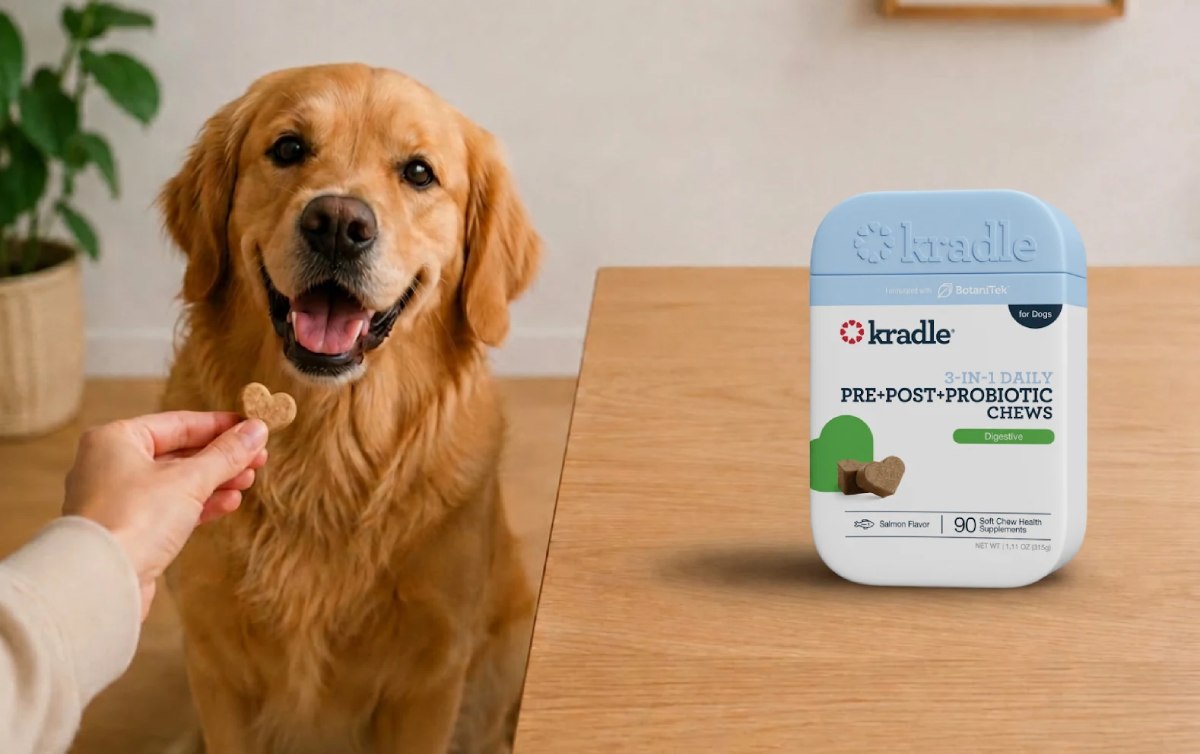
Kradle Daily Digestive Chews are one example of a formula that combines prebiotics, probiotics, and postbiotics in a convenient daily chew. With pumpkin fiber and five active probiotic strains, they are designed to help support digestive balance, normal stool quality, and overall gut health as part of your dog’s wellness routine.
Here’s what to look for in a probiotic supplement for dogs:
Dog-specific probiotic strains
Look for formulas made with probiotic strains selected for dogs. Strains such as Enterococcus faecium are commonly used in pet digestive supplements to help support proper gut flora and digestive tract health.
CFU count
CFU stands for colony-forming units, which refers to the number of live microorganisms included in each serving. A high-quality probiotic product should clearly list the CFU count on the label so pet parents know what their dog is receiving.
Added prebiotics
Prebiotics are fibers that help nourish beneficial bacteria in the gut. When included alongside probiotics, they help support a balanced digestive environment and contribute to normal digestive function.
Chew or powder format
The best format depends on your dog’s preferences and your daily routine. Chews can be convenient for dogs who enjoy treats, while powders may be easier to mix into meals.
Third-party testing or quality standards
Look for brands that prioritize quality, transparency, and testing. Clear quality standards can help support label accuracy and give pet parents more confidence in the product they choose.
No unnecessary fillers or artificial ingredients
For dogs with sensitive stomachs, it may help to choose formulas without unnecessary fillers, artificial colors, or artificial preservatives. A simple, well-designed formula can be easier to build into a consistent daily digestive wellness routine.
How Kradle's 3-in-1 CBD Pre+ Post+ Probiotic Chews Support Daily Gut Wellness
Kradle CBD 3-in-1 Daily Pre+ Post+ Probiotic Chews make it easy to support your dog’s daily gut wellness with prebiotics, probiotics, and postbiotics in one convenient chew. Made with Kradle’s BotaniTek™ Digestive Blend, each chew includes pumpkin and psyllium husk as prebiotic fiber, a five-strain probiotic blend with 3 billion CFUs, and 1 billion postbiotic CFUs to help maintain proper gut flora, support normal digestion, and promote digestive balance. The formula also includes nanoparticle, water-soluble broad-spectrum CBD and is third-party tested for quality and purity. As part of a consistent daily routine, these chews offer a simple way to support dog probiotics for gut health while giving pet parents a convenient option when looking for the best gut health supplement for dogs.
FAQs
What do probiotics do for dogs?
Probiotics are beneficial live microorganisms that help support the digestive tract and maintain proper gut flora. As part of a consistent wellness routine, they may help support normal digestion, stool quality, nutrient absorption, and overall digestive balance.
When should I give my dog probiotics?
Probiotics are often given with meals, but you should always follow the directions on the product label. Giving them at the same time each day can help make digestive support part of a steady daily routine.
Are prebiotics and probiotics the same thing?
No. Prebiotics and probiotics support gut health in different ways. Prebiotics are fibers that help nourish beneficial bacteria already living in the gut, while probiotics are live microorganisms that help maintain a healthy balance of normal intestinal flora.
How many CFUs does my dog need?
The right CFU amount depends on the product, your dog’s size, and their individual wellness needs. Many probiotic supplements for dogs list CFUs on the label, so pet parents can understand how many live microorganisms are included per serving. Always follow the product’s feeding directions or ask your veterinarian for guidance.
How long before I see results from probiotics?
Every dog is different. Some pet parents may notice changes in digestive consistency within the first several days, while others may need a few weeks of consistent use. Probiotics work best when used regularly as part of a long-term digestive wellness routine.
Do probiotics help with dog anxiety too?
Probiotics primarily support digestive health, but the gut also plays a role in overall wellness. Some formulas may help support normal emotional balance and a relaxed disposition by helping maintain a healthy gut environment.
Are CBD probiotic chews safe for dogs?
Choose CBD probiotic chews made specifically for dogs and look for brands that provide third-party testing, clear labeling, and quality standards. Pet parents should also follow the product directions and consult their veterinarian if their dog has specific health needs or takes medications.
What can I give my dog for gut health?
A balanced diet, consistent routine, fresh water, fiber-rich ingredients like pumpkin, and dog-specific probiotics can all help support gut health. Probiotics for dogs may help maintain proper gut flora, support normal digestion, and promote daily digestive balance.