
Dog Enrichment Ideas to Keep Your Pup Happy
Does your dog seem bored or restless? You might notice chewing shoes, barking for attention, or digging at the couch. Often, that is a sign your dog needs more than just a walk. Dogs also need mental stimulation. The right dog enrichment ideas add mental stimulation for dogs, encourage calmer behavior, and turn everyday moments into quality time together.
What is Dog Enrichment?
Dog enrichment is any activity that gives your dog a healthy outlet for natural behaviors. It engages both brain and body and taps into instincts like sniffing, foraging, chewing, and problem solving. Think of it as giving your dog a small “job” that leaves them more satisfied. It is not about keeping them busy all day. It is about balance.
When dogs do not get enough engagement, boredom often shows up as unwanted behavior. It can look like “being bad,” but it is usually your dog trying to entertain themselves. The good news is enrichment does not have to be complicated. Skip the bowl sometimes and scatter kibble in the grass. Hide treats in a rolled towel. Ask for a few easy cues before dinner. These small moments add challenge without adding pressure, and they can support focus, confidence, and calm, especially on days when a long walk is not possible.
Types of Dog Enrichment
A simple way to plan enrichment is to think in categories. Mix and match based on your dog’s needs, energy level, and preferences.
Food Enrichment
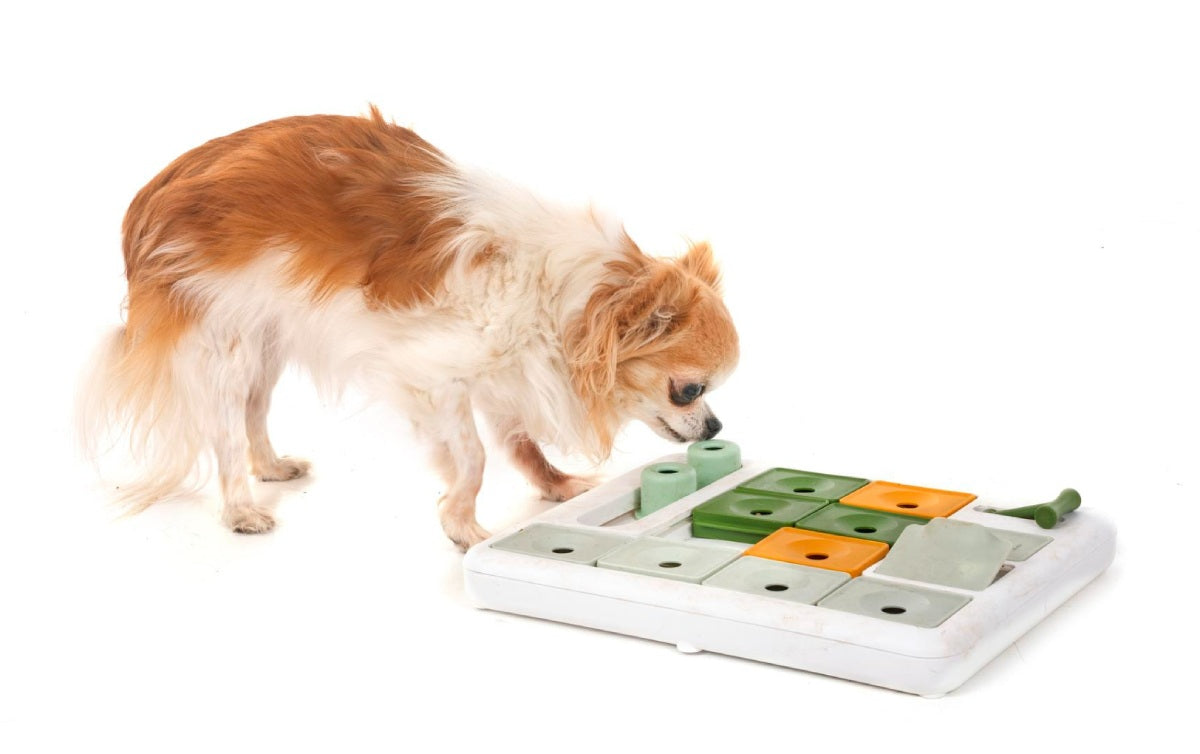
Food enrichment turns meals and treats into foraging and problem solving. It is a great option for fast eaters or dogs who benefit from extra engagement at mealtimes. Examples include puzzle feeders, snuffle mats, treat balls, and scatter feeding.
Cognitive Enrichment
Cognitive enrichment builds thinking skills through training games, puzzles, and simple pattern learning. Even short sessions can help your dog stay more focused and satisfied. Try a few minutes of basic cues, shaping games, or a new trick.
Sensory Enrichment
Sensory enrichment uses smell, sound, texture, and new experiences to engage your dog’s instincts, with sniffing being a big one. A “sniffari” walk, where your dog can explore at their own pace, counts as enrichment too. You can also rotate safe new scents, surfaces, or toys.
Physical Enrichment
Physical enrichment adds movement in a safe, enjoyable way. Think climbing, weaving, gentle jumping, tug, or low impact obstacle work scaled to your dog’s age and ability. The goal is fun and healthy motion, not intense exercise.
Social Enrichment
Social enrichment includes positive interaction with people, other dogs, or new environments, when your dog enjoys them. Follow your dog’s comfort level and keep experiences low pressure so social time stays positive.
Simple DIY Dog Enrichment Activities You Can Make at Home

These enrichment activities for dogs don’t need fancy supplies. Most can be done with items you already have. Always supervise, and choose materials that match your dog’s chewing style so enrichment stays safe.
Food-Based Enrichment
Muffin Tin Puzzle
Place treats or kibble into a muffin tin. Cover a few cups with tennis balls or sturdy, dog safe toys. Your dog will nudge and lift the covers to find the food.
DIY Busy Box
Use a clean cardboard box and fill it with crumpled paper. Sprinkle kibble throughout so your dog can sniff, dig, and forage. Avoid any staples, strings, or tape your dog could reach. This is one of the favorite dog enrichment activities because you can adjust the difficulty in seconds.
Snuffle Mat
Hide kibble in fabric strips or use a store bought snuffle mat as part of your routine. Sniffing is excellent mental stimulation for dogs, especially on rainy days or when you are short on time.
Frozen Enrichment Treats
Freeze dog safe broth, plain yogurt, or wet food in a rubber toy or silicone mold. This slows eating and gives your dog a longer activity to work on.
A Settling Chew Session
Many dogs naturally relax while chewing. Offer a long lasting chew that is appropriate for your dog and follow label guidance. Pair it with a short sniff activity first to build a simple routine: play, think, then settle.
Cognitive & Sensory Enrichment
Scent Game: “Find It”
Start simple by tossing a treat a few feet away and saying “find it.” Once your dog understands the game, make it slightly harder by hiding treats behind chair legs, under a towel, or around the room. This is classic canine enrichment that taps into natural sniffing instincts and can be surprisingly tiring.
The Shell Game
Set out three cups and hide a treat under one. Move the cups slowly, then let your dog choose. Keep the pace light and fun, and let your dog “win” often so the game stays rewarding.
Indoor Agility Course
Create a simple course using household items like pillows, a low broomstick resting on books, or a hallway weave with laundry baskets. Focus on safe movement with low obstacles, stable surfaces, and no slippery floors or high jumps.
DIY Flirt Pole
A sturdy pole, rope, and toy can create an engaging chase game in a small space. Keep sessions short and controlled, and avoid sharp turns or jumping, especially for puppies, seniors, or dogs that are prone to overdoing it.
If you are looking specifically for dog enrichment ideas DIY, start with the muffin tin puzzle and “find it.” Both are beginner friendly and do not require special tools.
Dog Enrichment for Every Season and Space
Indoor Enrichment Ideas
Indoor enrichment is perfect for bad weather, apartment living, or days when outdoor activity is limited. These activities can complement outdoor exercise, and they do not have to replace it.
Best indoor options:
-
“Find it” scent rounds for3 to 5 minutes at a time
-
Snuffle mat meals
-
The shell game
-
Cardboard busy box
-
Short trick training bursts, such as spin, touch, place, or sit pretty
If you want dog enrichment ideas at home, keep it simple with a daily rotation. Aim for one sniff game, one food puzzle, and one short training moment each day.
Outdoor Enrichment Ideas
Outdoor time adds fresh smells, sights, and sounds, like letting your dog read a brand new book with their nose.
Activities to try:
-
Sniffari walks, where your dog leads at a safe, relaxed pace
-
Scatter feeding in the grass
-
Backyard obstacle course
-
“Find it” using a favorite toy
-
Safe playdates, if your dog enjoys them and stays comfortable
Benefits of Regular Enrichment
When enrichment becomes part of everyday life, not a once a week project, you may notice positive changes such as:
-
Less destructive behavior
-
Less restlessness and fewer boredom behaviors
-
More mental and physical engagement in less time
-
A stronger bond through positive interaction
-
More natural behaviors like sniffing, chewing, and problem solving
That is why enrichment activities for dogs matter. They help your dog feel more satisfied, not just tired. Over time, you may see improved impulse control and more confidence in new situations. You may also notice less whining or pacing, and training can feel smoother because an engaged, fulfilled dog is often more focused.
How to Build Dog Enrichment Into Your Daily Routine
A simple way to make enrichment consistent is habit stacking, which means pairing enrichment with routines you already do.
-
Morning: While you make coffee, set up a food puzzle for breakfast.
-
Midday: Before lunch, play a quick 5 minute round of “find it.”
-
Evening: Before you watch TV, try a short game like hide and seek or the shell game.
-
Bedtime: Offer a frozen toy for calm, quiet downtime.
To keep things fresh, rotate activities every few days and adjust difficulty as your dog learns. Aim for short wins instead of long sessions. If you have multiple pets, give each dog their own turn so everyone stays comfortable. If you need a starting list of dog enrichment ideas, pick two for week one, then add more once it feels easy.
How CBD Can Support a Focused, Relaxed State
Sometimes a dog feels too overstimulated to engage with enrichment. Storms, visitors, or even small routine changes can make it harder for some dogs to settle and focus. In those moments, a puzzle toy or training session may not land the way it usually does.
Some pet parents add calming wellness support as part of a bigger routine. The foundation still matters most. Keep training consistent, offer daily enrichment, protect sleep, and stick to predictable schedules.
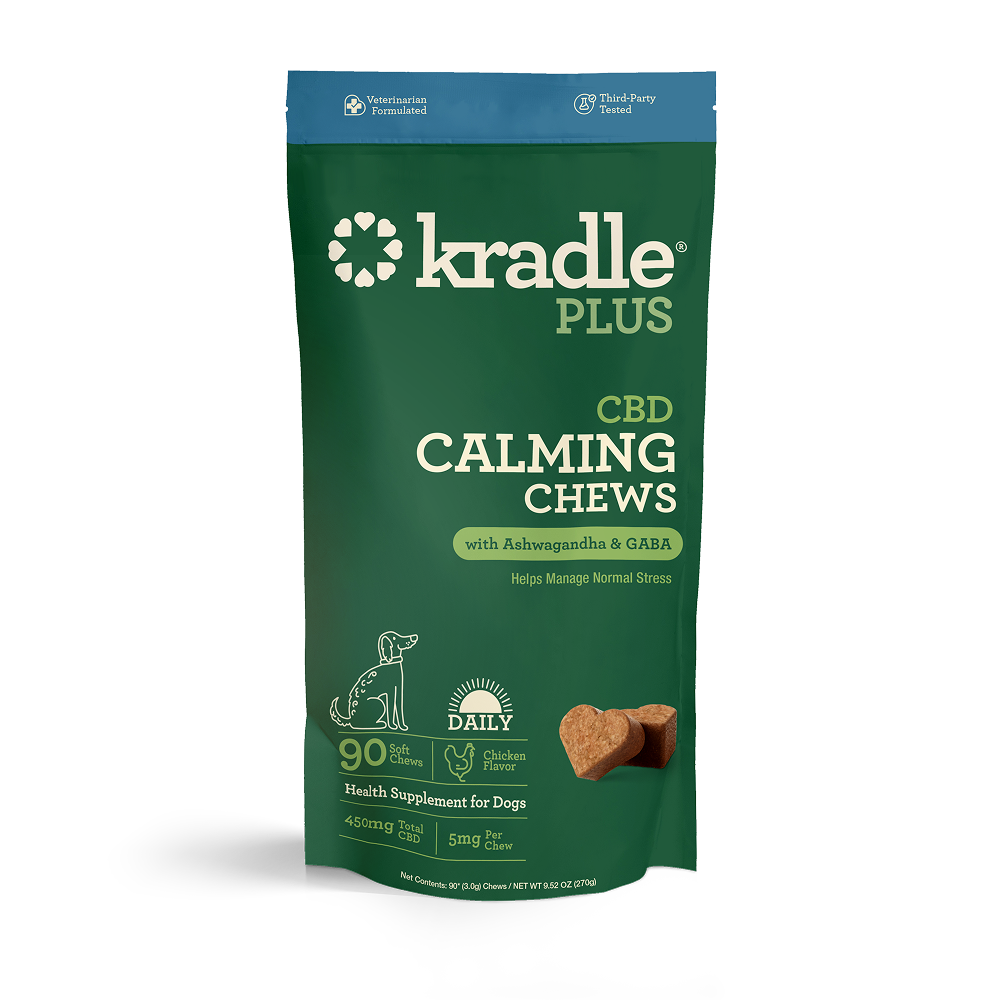
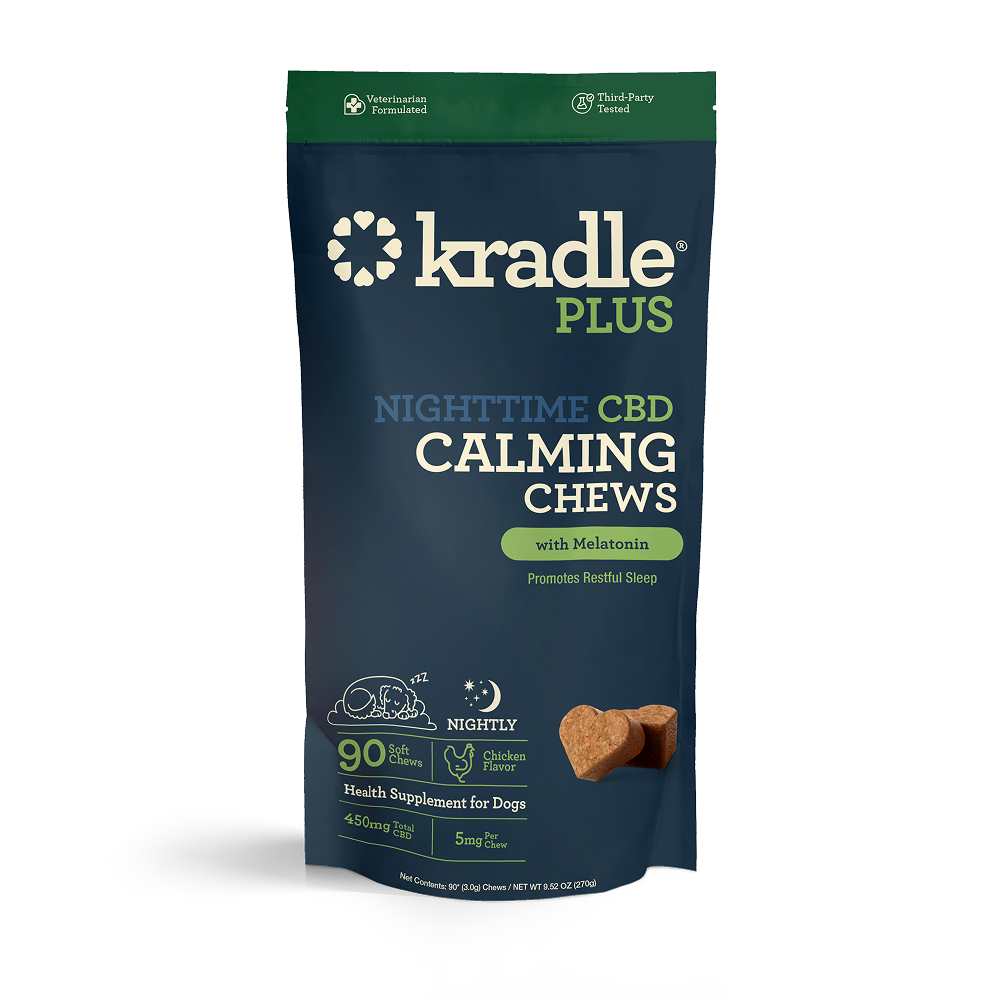
If you want to mentally stimulate your dog at home and also add gentle daily support, Kradle offers CBD pet products like CBD Daily Calming Chews and CBD Calming Melts. These products are designed to help support a calm disposition as part of an everyday wellness routine. If you have questions about what is appropriate for your dog, especially if your dog takes other supplements or medications, is very young or older, or has ongoing medical concerns, check with your veterinarian.
FAQs
How much enrichment does my dog need daily?
Many dogs do well with about 15 to 30 minutes total per day, split into short sessions. High energy dogs may need more, while seniors often prefer shorter, gentler options.
Can enrichment activities replace walks?
Not completely. Enrichment is powerful, but most dogs still benefit from outdoor time for movement and sniffing. Think of enrichment as a helpful boost, not a full substitute.
Are store-bought puzzle toys better than DIY options?
Not necessarily. Store bought puzzles can be durable and convenient, while DIY dog enrichment ideas can be just as effective and easier to customize for your dog.
What is the 7 7 7 rule for dogs?
It is a general guideline some trainers use for rescue dogs adjusting to a new home. Progress often happens in stages over roughly 7 days, 7 weeks, and 7 months, but every dog’s timeline is different.
What are the 5 pillars of enrichment for dogs?
A common framework includes physical activity, mental engagement, social interaction, sensory experiences, and food or foraging opportunities.
What is 15 minutes of mental stimulation for dogs?
It can be a short scent game, a puzzle meal, a brief training session, or a toy based problem solving activity. Many dogs find this kind of work surprisingly tiring.
What is the 3-3-3 rule for dog anxiety?
It is a settling in guideline often used for adopted dogs. Roughly 3 days to decompress, 3 weeks to learn the routine, and 3 months to feel fully at home. It varies by dog.
What is the 7 second rule for dogs?
It often refers to timing in training. Rewarding or marking the behavior within a few seconds helps your dog connect the action with the reward more clearly.