


Why Is My Dog Being Aggressive All of a Sudden: Causes & What to Do
It can be upsetting to see a usually friendly, tail wagging dog start acting differently. If you are asking “why is my dog being aggressive all of a sudden?”, you are not alone. Sudden behavior changes often have an underlying trigger, and the first step is to look at what has changed in your dog’s environment, routine, or comfort.
In this guide, we will cover common causes, early warning signs to watch for, simple steps that can help reduce tension at home, and when it is time to contact your veterinarian or a qualified trainer.
What Is Sudden Dog Aggression?

Sudden dog aggression refers to a noticeable change in behavior when a dog that is usually predictable begins showing aggressive signals without a long history of them. It can feel like a switch flipped, which can be confusing and unsettling for pet parents. This type of change often shows up around handling or touch, personal space, disrupted routines, or resource guarding, such as food, toys, or resting spots.
What “sudden aggression” can look like?
It often starts with subtle signals and can escalate if the underlying trigger is not recognized. Many families feel upset and confused, especially when they think, “my dog snapped at me when I tried to move him.” Some pet parents notice their dog becomes suddenly reactive toward one family member while staying friendly with others.
Common “out of nowhere” situations include:
- Approaching a resting dog too quickly
- Reaching toward a toy, chew, or food bowl
- Pulling back on a leash near other dogs
- Leaning in for hugs or close face contact
Common Causes of Sudden Dog Aggression

If you keep circling the question “why is my dog being aggressive all of a sudden?”, start by looking for what changed and what your dog may be trying to avoid. That kind of observation matters. It helps you move from panic to a clearer plan for safety and prevention.
- Situational nervousness or overstimulation, such as loud noise, unfamiliar people, or busy environments
- Physical discomfort or stiffness, especially if your dog seems sensitive to touch or handling
- Resource guarding of food, toys, chews, beds, or high value spaces
- Leash reactivity, where restraint can add pressure and frustration
- Redirected behavior, when excitement or stress spills onto the nearest person or pet
- Territorial or protective behavior around doors, windows, yards, or the home
- Chase and impulse triggers, where fast movement sparks a chase response
- Social tension, such as rough play, crowding, or competition between dogs
- Underlying health factors, since sudden behavior changes can sometimes be linked to physical discomfort or other internal issues, and a veterinary check can help guide next steps
If you are stuck in a loop searching “my dog keeps biting me aggressively,” stop guessing motives and start tracking the exact moments it happens.
Warning Signs Of Aggression In Dogs
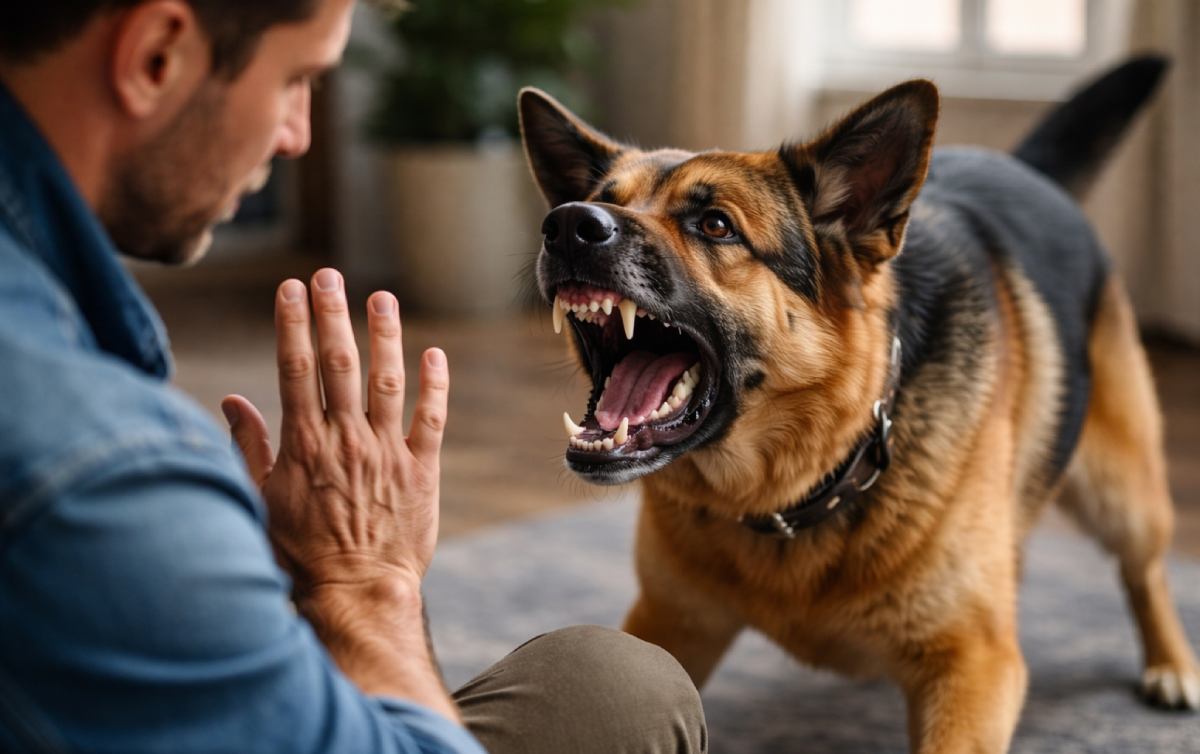
Watch for early signals and create space before things escalate:
- Freezing, often with weight shifted forward
- Stiff legs or a rigid, locked posture
- Hard staring with minimal blinking
- A closed mouth with tight lips or cheeks
- Rapid lip licking
- Turning the head away from an approaching hand
- Ears held back or flicking repeatedly
- A tail held high and stiff, or very still
- Hovering over food, toys, or a resting spot
- Blocking a hallway, doorway, or path
- A low growl that becomes deeper or more frequent
- Air snapping as a warning
What to Do If Your Dog Shows Sudden Aggression

Managing aggressive behavior works best with a calm, consistent approach focused on safety, environment management, and support.
1. Create a "Calm Zone"
Choose a quiet area for rest and protect it with a gate, pen, or crate. Let your dog choose to enter and exit so the space stays predictable and low pressure.
2. Reduce Daily Stressors
Keep greetings brief, move slowly when reaching toward your dog, and add sniff walks and calm enrichment such as food puzzles. Reduce crowding around doors, couches, and narrow hallways.
3. Use Positive Reinforcement Training
Teach clear alternatives such as go to mat, trade, move away on cue, or settle behind a gate. Focus on rewarding the behavior you want, without forcing contact.
4. Rule Out Health Issues
If the change is abrupt, new, or handling related, schedule a veterinary visit and bring notes on timing, triggers, and body language. That information helps guide next steps.
5. Work With a Professional
A reward based trainer can build a plan around your dog’s triggers and your home setup. Coaching can improve timing, consistency, and safety for everyone.
When to Consult Your Vet
Contact your veterinarian if aggressive behavior is new, increasing, or closely linked to touch or handling, stairs, jumping, or sudden sensitivity. Bring a short note describing what happened right before the moment, what you observed, and how long it lasted.
Small details can help your veterinarian see patterns. Track schedule changes, new visitors, grooming attempts, diet changes, sleep disruption, or a new dislike of being approached while resting. That record can make the appointment more useful and help guide next steps.
If you are considering CBD for Pets as part of a wellness routine, involve your veterinarian so you can choose an appropriate plan and monitor your dog’s response. CBD products are designed to help support a calm disposition during times of normal, occasional stress, and they should be used alongside training, structure, and safety focused routines.
FAQs
What if your dog suddenly becomes more aggressive?
Start with safety. Create distance, separate people and pets if needed, and prevent repeat triggers for the next few days. Then track patterns, including what happened right before the behavior, your dog’s body language, and what helped the situation settle. Share those notes with your veterinarian or a qualified trainer.
How to manage [2] dog-on-dog aggression?
Separate dogs during high value moments like meals, CBD Calming Chews for Dogs, toys, and tight spaces. Supervise interactions, use barriers when you cannot supervise, and avoid forcing dogs to “work it out.” If there is ongoing dog aggression towards other dogs in home, a qualified trainer or veterinary behaviorist can help you build a structured plan for calm re introduction and safer routines.
Why Is My Dog Suddenly Aggressive Towards Me?
Sudden changes often happen when a dog feels uncomfortable, startled, crowded, or unsure about a situation. Avoid physical confrontation and give your dog space. Focus on prevention by identifying the trigger, adjusting handling, and using positive reinforcement to teach safer alternatives. If the change is new or handling related, contact your veterinarian to rule out physical discomfort.
Do dogs go through an aggressive phase?
Some dogs become more reactive during adolescence, often around 6 to 18 months, as energy, confidence, and boundaries shift. Even so, sudden or intense aggression should not be brushed off. It is worth addressing early with structure, training, and guidance.
At what age do most dogs become aggressive?
Behavior challenges often show up during social maturity, commonly around 1 to 3 years, when dogs become more confident and patterns get established. New behavior changes can also appear later in life, which is another reason to involve your veterinarian if aggression is sudden or worsening.
What is a red flag dog's behavior?
Red flags can include freezing, hard staring, guarding items, blocking a path, growling, or snapping when approached or touched. It is especially concerning if warning signals appear to escalate quickly or happen more often.
Why does my dog keep biting me aggressively?
If you keep thinking “my dog keeps biting me aggressively,” focus on what happened right before the bite. Many dogs bite to create space when they feel crowded, startled, or uncomfortable. Look for earlier signals like stiffening, turning away, lip licking, or growling. Reduce trigger situations and contact a trainer or your veterinarian for a plan.
How to deal with an aggressive dog?
Use safety and management first, such as gates, leashes, separation during high value situations, and clear household rules. Pair that with a veterinary check if the behavior is new or escalating, and use consistent reward based training to teach alternative behaviors and build predictability.
Why is my dog aggressive towards other dogs?
Common reasons include frustration on leash, limited positive social experiences, conflict over resources, overstimulation, or dogs feeling crowded. Focus on distance, structure, and calm introductions. A qualified trainer can help you build a step by step plan based on your dog’s triggers.